 EN
 PT
 RU
 ZH
 ES
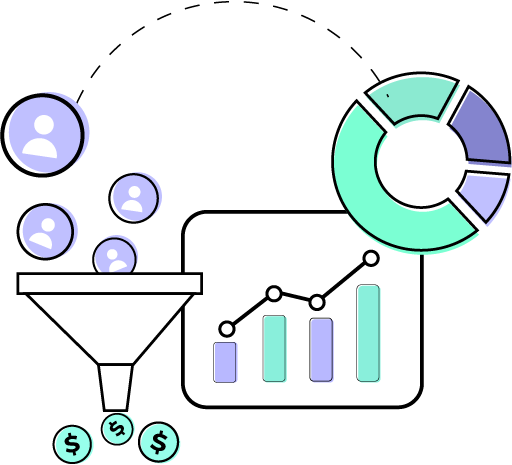
Conventional marketing platforms laid emphasis on increasing brand visibility and audience engagement levels, making it difficult to determine how every dollar spent is contributing to increasing business ROI. As a result, businesses often struggled to establish a direct link between their marketing investments and the actual revenue generated, making it challenging to measure campaign effectiveness and optimize spending for better returns. However, performance marketing has changed the marketing game by including data-driven decision-making, measurable results, and smarter ways to reach out to the target audience, along with improving conversion ratios at the heart of its strategies and showing marketers how to scale campaigns using automation software.
Performance marketing in today's times involves following a systematic approach to plan, execute, optimize, and evaluate campaign performance. To do so, this model tracks specific KPIs such as sales, clicks, conversion rates, ROAS (return on ad spend), and app installs. Instead of banking on reach and impressions alone, this mechanism assesses how affiliate campaigns perform against certain business objectives and accordingly allows marketers to allocate budgets more judiciously to achieve business results, including within Network affiliate marketing and a CPA network platform. This has reinvented the wheel of achieving ROI by helping marketers understand how to generate meaningful results by precisely tracking their target audiences, measuring key metrics, using analytics for real-time decision-making, and identifying those strategies that deserve further investment.
The Role Of Performance Marketing In Maximizing Business ROI
Performance marketing is transforming the way businesses achieve ROI by aligning campaign activities and end results with measurable business objectives. This makes it easy to visualize where resources are being spent and how marketing strategies are influencing campaign profitability, delivering the highest ROI, and cutting down on unnecessary expenses. Here is how performance marketing is playing an indelible role in maximizing business ROI:
1) Turning Raw Data into Profitable Marketing Decisions:
Data is an important asset in performance marketing. By analyzing campaign data in great detail, marketers can refine their strategies to improve customer satisfaction, enhance advertising effectiveness, optimize resource allocation, and identify opportunities to improve overall campaign performance. Examining underlying data helps marketers to investigate the root causes of marketing-related problems and take corrective actions to solve those problems. For example, a sudden drop in conversion may indicate that an ad is ineffective at resonating with its audience, or the offer is no longer competitive, the landing page is difficult to navigate, etc. Marketers can address these issues by testing different ad creatives and messaging, reviewing competitor offers, and optimizing landing page design and navigation. By monitoring conversion data and conducting A/B tests, they can identify the underlying issues, implement targeted improvements, and enhance campaign performance.
Data-driven marketing helps businesses to make more informed decisions, avoid unnecessary expenditure, and identify those areas that require strategic intervention, etc. Businesses can leverage raw insights to identify, target, or retarget their high-performing audience segments, optimize marketing campaigns, allocate budgets more wisely, and personalize their messaging to align with customer preferences. For example, a returning customer may indicate that remarketing strategies are encouraging repeat purchases, retention campaigns are delivering positive results, and personalized offers are generating higher purchase rates than those observed among first-time visitors.
2) Moving Beyond Traditional Ways of Performance Marketing:
Traditional marketing prioritized parameters of increasing brand awareness, audience reach, and ad impressions. These indicators do not always reveal whether a campaign is generating qualified results, resulting in long-term customer relationships or leading to completed purchases. In contrast to this, performance marketing in today's times adds a layer of accountability by tying marketing activities to specific actions. For instance, marketers measure the number of app installs, website registrations, subscriptions, and quality of in-app purchases, etc., to evaluate how effectively their campaigns are driving tangible results. They also track key metrics to understand which of their campaigns deliver the highest value. These useful insights help businesses to move beyond just surface-level metrics to focus on outcomes that maximize their campaign ROI. In that context, today's marketing encourages decisions based on actual outcomes and other evidence rather than relying merely on speculation. For instance, if a particular channel consistently draws in customers at an optimized cost while another channel only generates clicks without meaningful conversions, marketers can adjust their strategies automatically towards those campaigns that are cost-effective and have a high probability of success.
Core Elements To Maximize ROI In Performance Marketing:
Although performance measurement and campaign optimization provide a strong basis for marketing campaigns, sustainable ROI depends on several other key factors, which include understanding the behavior of their customers, reliable business collaborations with partners, and the ability to adapt to changing circumstances. Here are some of the core elements to maximize ROI in performance marketing:
1) Customer Data Platforms (CDPs): Building a Unified View of Customers:
Customer data platforms provide a unified view of customers by collecting, consolidating, and organizing customer information from multiple sources, including CRM systems, websites, and mobile apps. In the absence of this unified view, marketers struggle to understand how different touchpoints contribute to meaningful outcomes. For example, one customer discovers a company's product through social media, visits a company website through viewing a search ad, purchases a product based on email marketing, etc., illustrating Multi-touch mobile marketing and Deep linking analytics across touchpoints. Here, in this case, it becomes difficult to connect these individual dots together to present one single unified piece of information regarding the customer's purchasing journey. A CDP in this regard helps marketers to understand their customers' behavior, preferences, and engagement across different marketing channels in a more nuanced manner to deliver more relevant marketing experiences.
2) Strengthening Marketing Performance Through Partnerships:
Performance marketing rarely operates in silos. Businesses flourish based on robust partnerships with their partners, affiliates, advertisers, networks, tech providers, etc., supported by Affiliate management for agencies, Agency campaign management, and partner relationship software. These partners expand businesses' reach to diverse geographies and target interested audiences, which otherwise are difficult to tap into by businesses alone. Additionally, these partners have associations with audiences whose interests align with brands' objectives, have a higher degree of engagement levels with the brands, and have higher average lifetime values (ALV). Businesses can cement these relationships by identifying realistic targets, maintaining a regular review and assessment of how these relationships are evolving, opening up regular communication lines to share valuable insights, and reviewing results together with all involved entities.
3) Flexibility to Adapt Quickly to Changing Environments:
Businesses that depend on fixed or static strategies without reviewing their performance at timely intervals and without introspecting to fine-tune them risk allocating budgets towards those activities that no longer deliver the desired results, a concern that can be addressed with Agency performance software and tools to manage multiple affiliate clients. Hence, flexibility is a crucial component of increasing ROI in performance marketing. Marketers should also evaluate key performance metrics such as CAC, ALV, ROAS, and conversion rates and adjust their strategies promptly in response to any significant changes before they lead to substantial financial losses.
For example, businesses stay relevant by testing new creative elements, different messages, landing pages, reducing overall spending, or catering to newer audience segments. In a dynamic marketing environment of today's times, where platforms keep evolving, customer preferences are shifting, a flurry of competitors is flooding the market, ad costs are going haywire, and privacy regulations are also becoming too inconsistent, etc., customers need to be flexible to respond to emerging market conditions while running multiple campaigns across different markets, devices, and channels. Ultimately, the ability to adapt quickly to varying market conditions enables marketers to optimize campaign performance, minimize wasted spending, and maximize ROI while staying ahead of the curve.
How Offer18's Performance Marketing Platform is Redefining Business ROI
In today's competitive marketing landscape, businesses need to leverage the right set of tools and technologies to track, optimize, and manage campaign performance; strengthen partnerships; drive conversions and ROI; or to make more meaningful, result-oriented decisions using Advertiser network software and Marketing agency tracking capabilities where relevant. Offer18, a performance marketing platform, provides tracking, reporting, analytics, and campaign management capabilities that help teams monitor campaign performance across channels and evaluate what is working and what is not, and accordingly make adjustments to improve campaign efficiency and make decisions that result in an increase in business ROI. This becomes possible by using a centralized dashboard and advanced reporting and analytics features of campaign management, which brings all campaign data and operational workflows together in one combined unit, which helps marketers to manage them more efficiently through enhanced visibility.
Offer18's automation and campaign management capabilities support the use of efficient workflows, which help it to respond promptly to changes in performance conditions. Rule-based mechanisms manage campaigns according to predefined conditions and performance thresholds. Such mechanisms trigger predefined actions whenever a campaign meets or exceeds a particular threshold. For instance, marketers can automatically pause underperforming campaigns, adjust campaign settings, or receive alerts when spending surpasses a specified limit using a Campaign scheduling tool or an Auto affiliate campaign builder where applicable. If a traffic source starts to show a decline in conversions and there are unusual performance patterns, marketers review that traffic source and take appropriate corrective actions. Thus, rule-based campaign management gives a greater degree of control and autonomy to manage advertising activities. Automation reduces manual intervention, streamlines routine operational activities, improves campaign efficiency, and supports faster data-driven decision-making. Alerts and notifications are triggered automatically when campaign performance deviates from a set standard. Thus, the Offer18 platform enables media buyers to monitor campaign results and adjust their strategies accordingly with impeccable precision, ensuring efficient budget allocation, improved campaign performance, and maximized ROI.
Conclusion
Performance marketing uses tracking links, pixels, S2S postbacks, analytics, and other third-party platforms and attribution solutions to measure campaign performance. Elements that define performance marketing work best when supported by clearly defined objectives, measurement techniques, commitment to continuous improvement, and responsible data practices. The future of performance marketing is contingent on how well real-time data insights convert into profitable actions, the building of valuable partnerships, businesses' adaptability to changing market conditions, and the balance of CAC (customer acquisition costs) with ROAS for sustainable growth, etc. By aligning these factors with clear business objectives and continuous campaign optimization, businesses can build more accountable, efficient, and profitable marketing strategies that drive sustainable growth.