EN
 PT
 RU
 ZH
 ES
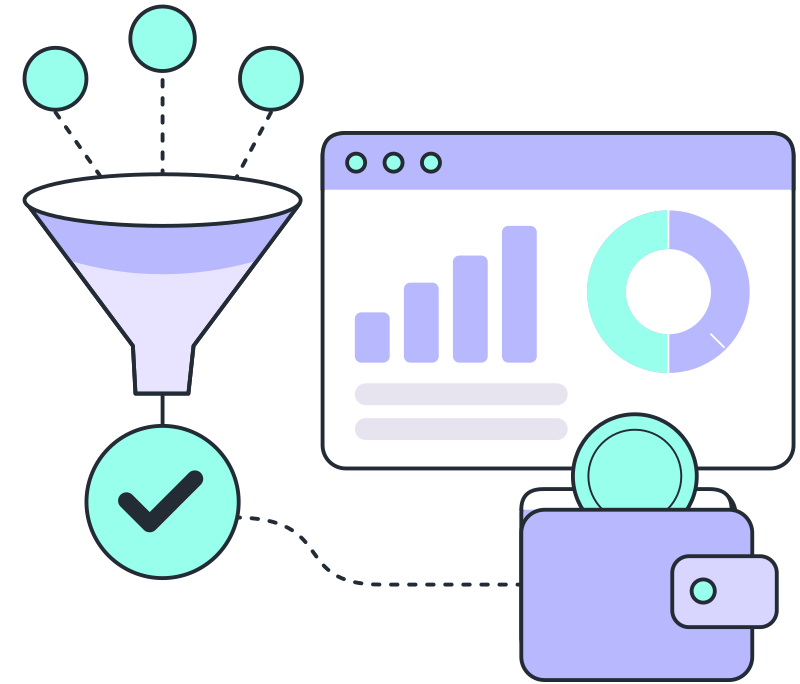
A fintech affiliate conversion rarely happens in one step. A user clicks an ad, lands on a page, installs an app or opens a form, enters personal details, completes identity verification, waits for approval, and may need to fund the account or make a first transaction before the advertiser considers the lead valuable. Days can pass between the initial click and the event that earns money.
That timeline challenges simple tracking setups. If you track only the first conversion, you may pay partners for sign-ups that never become customers. If you track only the last event, partners cannot see which traffic is working. When your platform's numbers do not match the advertiser's data, disputes can arise before payouts are processed.
This guide explains how to track a multi-step fintech funnel, define payable events, manage delays and rejections, protect against fraud, and keep partners informed. It applies to lending, credit cards, wallets, trading apps, insurance, and other regulated financial products.
Important: Financial promotions are regulated differently across markets. This article covers tracking and operations, not legal or compliance advice. Confirm applicable requirements with the advertiser and your advisers.
Why Fintech Funnels Are Different
Most ecommerce affiliate sales have a clear conversion point: an order is placed and paid for. Fintech conversions differ in several important ways.
- There are multiple milestones. Each stage can have a different value to the advertiser.
- Verification takes time. Identity checks and credit decisions may take hours or days, and some applications are rejected.
- Users often move between web and app. A click may happen in a browser while later steps occur in a mobile app.
- Advertiser data arrives later. The decision about what counts as approved usually sits in the advertiser's own system.
Fintech tracking is therefore less about capturing one event and more about connecting a series of events to the original click.
Map the Funnel Before Configuring Tracking
Begin with a plain-language funnel map agreed with the advertiser. A typical credit card or wallet funnel may include:
- Click on the affiliate link
- Landing on the application or download page
- Registration or app installation
- Application submission with personal details
- KYC or verification completion
- Approval by the advertiser
- Activation, such as a first deposit, first card use, or first transaction
Not every stage needs to be payable. Decide which stages are tracked for visibility, which trigger payouts, and which are used only for quality analysis. Put the agreement in writing so rejections and edge cases do not become arguments later.
Choose the Payable Event Carefully
The payable event determines the incentives within your programme. Each option encourages different behaviour and creates a different balance of risk between the advertiser and affiliate.
Paying on Registration
Registration is easy to track and attractive to partners, but it rewards volume without necessarily rewarding quality. It is the option most exposed to low-intent and fraudulent sign-ups. It is best suited to products where registration itself has value to the advertiser.
Paying on KYC or Approval
Paying after KYC or approval aligns compensation with a real, verified customer. The trade-off is a longer delay and less immediate visibility for partners. Intermediate-stage reporting and clear expectations about approval timing are therefore essential.
Paying on Activation
Activation aligns most closely with advertiser revenue, but it creates the longest delay and places more risk on partners. A programme using this model may need higher payouts to attract strong traffic sources.
Using a Hybrid Structure
Many programmes pay a small amount for an early milestone and a larger amount for a later one. This keeps partners motivated during the waiting period while continuing to reward quality. It also requires reliable tracking of every stage against the same original click.
How Multi-Step Tracking Works
The reliable way to connect funnel stages is through server-to-server postbacks tied to a click ID. An affiliate tracking platform can use this identifier to connect later events to the correct source.
- The affiliate link generates a unique click ID when the user clicks.
- The click ID is passed to the advertiser's landing page, app link, or application form and stored with the user's record.
- When a milestone occurs, the advertiser's system calls the tracking platform with the click ID and an event identifier.
- The platform matches the event to the original click and affiliate, records it as a separate stage, and applies the relevant payout rule.
This is the same principle used in other postback integrations, but it matters more in fintech because later events often occur in a different system or on a different device. If the click ID is lost, those stages cannot be attributed and the affiliate may lose credit for genuine customers.
Where Click IDs Can Be Lost
Test the following handovers carefully before launching a campaign:
- Redirects between the landing page and application form
- The handoff from a web page to an app store listing and then to the installed app
- Single sign-on or third-party identity verification screens
- Consent banners or pre-landers that strip query parameters
- Advertiser-side forms that do not save the parameter with the user's record
When a funnel moves from web to app, mobile attribution sits between the click and the first in-app event. Offer18's mobile attribution capabilities track installations and in-app events, allowing an in-app registration or first transaction to be linked to the original source. Confirm the exact setup with the advertiser's app team before launch.
Handle Delays, Rejections, and Reversals
Fintech conversions can change status. A lead that appears valid on day one may be rejected on day four, so the operational process must account for later decisions.
Use Statuses, Not Just Counts
Track every conversion with a status such as pending, approved, or rejected. Show pending conversions separately from approved conversions so partners can understand how their traffic is progressing without being paid prematurely.
Align the Approval Window
Match the approval window to the advertiser's rejection terms. If the advertiser can reject applications for 30 days, a shorter payout window may cause the network to pay money it cannot recover. Agree on the window before promising partners a payment date.
Record Rejection Reasons
Where possible, record reasons such as failed verification or a duplicate application. These details help distinguish quality problems from fraud. Partners can improve their traffic only when they understand what is failing.
Expect Tracking Discrepancies
Your platform and the advertiser will not always report identical numbers, especially when time zones, statuses, deduplication, and delayed events are involved. The guide to affiliate tracking discrepancies provides a diagnostic order for investigating differences.
Watch for Fintech Affiliate Fraud
Financial products can attract fraud because payouts are high. Common patterns include:
- Fake or synthetic identities submitted to reach an approval event
- Incentivised sign-ups where users register only for a reward and then abandon the product
- Bot traffic completing forms at speeds and in patterns that do not resemble human behaviour
- Click injection and click flooding in app-install funnels, stealing credit from genuine sources
- Duplicate applications submitted from the same device or details under different accounts
Some patterns appear in timing data. A very short interval between click and registration, or between registration and application, can indicate automation. Offer18's Conversion Risk Monitor uses click-to-install time as one variable when investigating suspicious conversions. Fraud Fender filters repeated and bot clicks from the same IP and ISP, while the platform supports one-click integrations with third-party fraud tools such as 24metrics and FraudScore.
The key principle is to run checks before payment rather than after it. Money paid for a fraudulent approval is usually difficult to recover, so keep fraud review within the approval window.
Structure Payouts Around the Funnel
After events and statuses are tracked, payout rules determine how they become payable. Useful building blocks include:
- Stage-based payouts, with a separate rate for each milestone
- Geo-based payouts, reflecting differences in products, approval rates, and customer value by country
- Dedicated payouts for top partners with negotiated rates
- Offer- and affiliate-level caps, preventing a surge in low-quality traffic from exhausting the advertiser's budget
- Revenue share or hybrid models based on later customer value
Offer18 supports dynamic payout configuration, dedicated affiliate payouts, and CPS, RevShare, CPL, and hybrid pricing models. The guide to affiliate payout management and automation explores the financial side in more detail.
Give Partners Clear Funnel Reporting
Fintech affiliates need to know whether their traffic is converting throughout the funnel. Reports should show:
- Clicks and registrations
- Stage-by-stage totals, including pending and approved conversions
- Rejections and their reasons when shared by the advertiser
- Approved payouts and expected payment dates
Transparent reporting reduces disputes and helps strong partners optimise for quality rather than volume.
How Offer18 Supports Fintech Programmes
Offer18 provides a fintech-focused affiliate software solution. Multi-step conversions are tracked through server-to-server postbacks, with each approval stage reported separately.
Available pricing models include CPS, RevShare, CPL, CPA, CPI, and hybrid structures. Payout tiers can vary by goal, volume, or geography. Fraud Fender, the Conversion Risk Monitor, and third-party fraud integrations help screen traffic before payment, while multi-level capping controls spend.
A dedicated Finance Manager role places payout work in a separate permission set, and billing tools generate invoices for advertisers and affiliates from the same tracked data.
Frequently Asked Questions
What is KYC conversion tracking in affiliate marketing?
KYC conversion tracking records the identity verification stage of a financial funnel as a separate event linked to the original affiliate click. It allows a programme to pay for verified customers instead of unverified sign-ups.
Which event should affiliates be paid on?
The right event depends on the advertiser's economics. Registration is easy to track but may deliver lower quality. KYC or approval aligns payouts with real customers, while activation aligns with revenue but delays payment. Many programmes combine a smaller early payout with a larger later payout.
How long should the approval window be?
Match the window to the advertiser's rejection terms. If applications can be rejected for a month, a much shorter approval window risks paying money that cannot be recovered.
How are conversions tracked from web to app?
Pass the click ID through every handover and use mobile attribution to connect the installation and in-app events to the original click. Test the complete path from beginning to end before spending on traffic.
Why do conversion totals differ from the advertiser's?
Common causes include status differences, delayed events, time zones, deduplication rules, and lost click IDs. Compare data at the click-ID level and work through each funnel stage in order.
Build the Funnel Map Before Sending Traffic
Fintech affiliate marketing rewards precision. Agree on the funnel with the advertiser, choose payable events deliberately, protect the click ID at every handover, and screen for fraud before issuing payment. With clean multi-step tracking, partners can see what works and advertisers can trust what they are paying for.
Start Your 14-Day Free Trial
Set up a multi-step fintech campaign in Offer18, test postbacks from end to end, and view every stage in your reports. No credit card is required. Start your free trial.