EN
 PT
 RU
 ZH
 ES
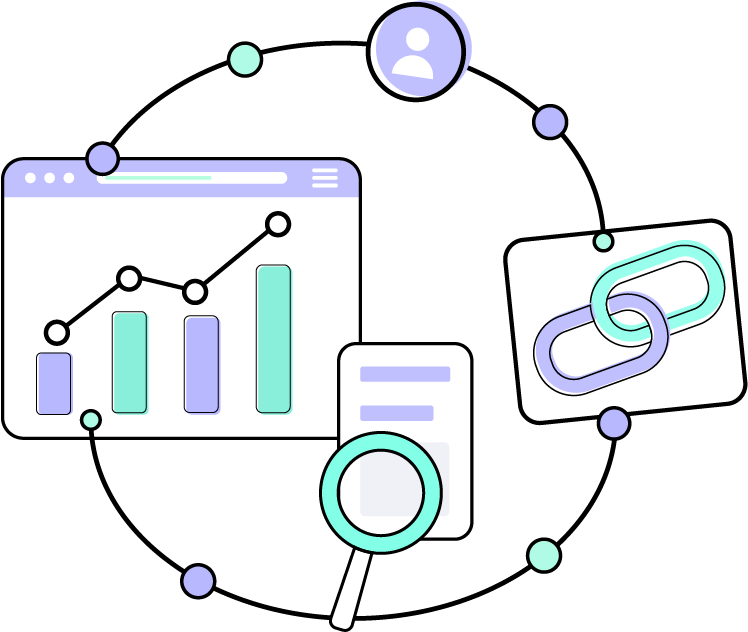
In the rapidly evolving world of affiliate marketing, businesses should not only focus on merely attracting traffic but also need to track what actions their customers are taking, what the source of their traffic is, and which of their interactions are converting into real conversions. With the rapid surge in digital platforms and performance-based campaigns, advertisers need advanced tracking solutions that can gain insights into users' changing behavior and real-time campaign performance.
Two technologies that are important in achieving these objectives are attribution event tracking and deep links in affiliate marketing. While attribution event tracking helps to track, measure, and monitor the user actions after they interact with an advertisement, deep link tracking directs users to specific webpages or areas within a website or mobile application. With the combination of these two technologies, marketers are able to create a more cohesive marketing ecosystem, which helps businesses to increase user engagement, enhance their campaign performance, and eventually increase the rate of their conversions. In short, this mix of two technologies can help marketers extract the best out of their product performance.
This powerful blend of these two technologies links the various stages of the customer's purchasing journey with each other to create a more unified workflow. It makes it easier for marketers to track user interactions and measure conversions. For example, if a user clicks on an ad and lands on the product page of an e-commerce application, then it is the deep link tech that enables the user to navigate to the final destination, and attribution event tracking will record the steps taken by the user from an initial touchpoint to the final purchase.
The Power of Deep-Link Tracking:
Deep link tracking is a technology that directs users to intended locations within their websites or applications and makes their journey more direct and relevant by connecting the advertisement that the user has seen to the landing page where the user ultimately lands or to the specific content page that the user wishes to explore. A well-implemented deep link technology minimizes the chances of unnecessary navigation and helps users navigate directly to the desired product pages, offer pages, or take them straight away to the services page in fewer steps. Deep linking analytics further helps marketers understand how users interact with affiliate links, which destinations attract more engagement, and how deep links contribute to conversions more effectively.
Deep links are not a promise of a guaranteed conversion; rather, they create conducive conditions for a seamless customer experience with a brand. This feature is important because it works well even with multiple campaigns that are managed through an affiliate management program and helps connect those campaigns to relevant in-app offers, registration forms, landing pages, or product listing pages. This process reduces the possibility of any friction that may arise during the course of a user's journey or when users complete a specific action.
The Perfection of Attributing Events:
Attributing events means recording the user's actions after they land on a particular destination or examining their actions after their initial interaction with a website or an app. The actions taken by users are known as events, and In-app event tracking presents a great deal of information about how users engage with an app, while website interactions reveal how users engage with a website. User engagement can be tracked in terms of app installation, product views, adding items to cart, making purchases, filling out an online form, the sign-up process, subscribing to channels, and more.
By carefully analyzing post-install events through App install attribution, marketers can track key app-related actions, such as app installations, user registrations, in-app purchases, feature usage, and subscription sign-ups, to compare traffic quality across different sources and identify which campaigns attract interested users, drive conversions, and contribute more meaningfully to their campaign objectives. This eliminates the need for guesswork or any surface-level metrics that arise out of making speculations or incomplete and inaccurate information. It also helps to measure campaign performance more objectively based on tangible results.
How Attribution Event Tracking and Deep Linking Work Together in Harmony
Although attribution event tracking and deep linking serve different purposes, they work together seamlessly to achieve complementary objectives and improve overall campaign performance. When integrated, they help to track the user's initial interaction with a brand, to subsequent engagement details, and to final conversion activity. Without deep link technology, the user lands on a generic destination that may not be what you intended. Without attribution event tracking, marketers struggle to highlight the exact customer conversion journey or are unable to attribute those events that led to meaningful outcomes. Hence, both technologies work together to present a complete picture of the user's buying journey, capturing its finer nuances at every stage. Both help to uncover what happens after an initial click and how well the campaign has met its intended objectives.
Benefits of Deep Link and Attribution Events Tracking:
Both attribution event tracking and deep link technology simplify campaign management and coordinate all campaign activities, such as link management, campaign identification, and conversion measurement, in a unified fashion. Let us see their benefits:
1) Connecting User Interactions to Conversion Outcomes:
One of the main advantages of these two technologies is to connect all user interactions with their actions. Marketers examine how a user moves from an initial view of an ad or click of an affiliate link to landing pages, signing up, adding items to their cart, making purchases, and finally checking out. Even if users do not make a purchase, marketers inspect all downstream events and touchpoints to identify the problem. Is it the issue with the destination or the offer page, the onboarding process, etc.? These insights help them make necessary improvements to increase campaign performance and drive more sales and conversions.
2) Improved Campaign Optimization:
Both these technologies help marketers distinguish between campaigns that barely make an impact and those that generate results. If deep links let you identify which connections and destination pages are gaining more engagement, attribution events can actually reveal which campaigns are associated with meaningful user actions. Marketers use this information to fine-tune their campaign elements, which include refining creative assets, audience targeting, landing page experiences, and allocating budgets more wisely. Together, these insights enable marketers to optimize campaigns more effectively through Multi-touch mobile marketing, improving traffic acquisition strategies, refining post-click experiences, and allocating budgets toward campaigns that deliver meaningful results.
3) A Much-Better User Experience:
A correct destination page and a seamless user journey contribute to making a meaningful difference in user experience levels and result in more engagement. With deep links, users click a particular offer, product page, or application feature and are directed to the appropriate location. Attribution events help marketers understand how users interact with these destinations and which actions they take. If users regularly visit an application or a website but never convert, then marketers investigate the reasons behind the user's abandonment, digging into analytics to reveal whether unexpected costs, confusing navigation, limited options for payment, incomplete product information, etc., are hindering the buying process. This helps improve the user experience by addressing the specific barriers that prevent users from completing their required actions.
4) Support for Mobile Attribution:
Mobile campaigns include several stages, including clicking an ad, installing applications, performing in-app and post-install events, etc. Combining both deep link and attribution event tracking can help to connect all these stages through Mobile conversion tracking and help marketers understand the relationship between user acquisition and the engagement of downstream events. Deferred deep linking helps users reach relevant in-app content after successfully launching an application, while attribution event tracking measures other supportive actions performed inside the app.
5) Optimizing Budget Allocation:
Deep links and attribution event tracking help marketers optimize budget allocation by identifying which campaigns, traffic sources, affiliates, and audience segments deliver the most valuable results. Deep links direct users to relevant product pages or app features, while attribution events track their actions after clicking these links, such as signing up, adding products to their carts, or completing purchases. By analyzing overall campaign performance, including customer acquisition cost (CAC), conversion rates, user behavior, and revenue generated by different traffic sources, marketers can determine which campaigns deliver the highest return on ad spend (ROAS) and return on investment (ROI). These insights enable marketers to prioritize high-performing campaigns, reduce spending on underperforming activities, and allocate their budgets more effectively toward campaigns that generate better returns.
How Does the Offer18 Platform Use Deep-Link and Attribution Events for Its Campaigns?
Offer18, an affiliate marketing platform, uses deep links, deferred deep links, and attribution events to relate its affiliate traffic to meaningful user actions. Deep links direct its users to desired destinations such as product pages, offer pages, landing pages, sponsored ads, booking pages, in-app features, etc., thereby creating a more straightforward and more relevant path to conversion. Deferred deep links enhance this process by preserving the intended destination even when users do not have the required mobile app installed. When users click an affiliate link, they are redirected to install the app first. Once the installation is complete and they open the app, the deferred deep link directs them to the originally intended content rather than the app's homepage. This helps create a smoother user experience and reduces friction in the conversion journey, maintaining continuity between the initial click and subsequent app engagement. Attribution events help marketers track user actions, such as app installs, registrations, and purchases, to measure campaign performance and identify successful campaigns. These actions include app installs, product views, add-to-cart activities, registrations, etc. Instead of marketers focusing only on clicks and installs, they make use of event-level data to understand which campaigns are generating profitable returns. This enables more informed decisions about campaign optimization and budget allocation.
Conclusion:
Attribution event tracking and deep link technology help to create more relevant user journeys and measure the marketing outcomes more effectively. By harnessing these two technologies, marketers can connect campaign interactions to real-time results by tracking and measuring partner performance throughout their buying journey, better understand traffic quality, conversions, and user engagement, and make more rational decisions. This approach keeps the campaign relevance intact from the start of the marketing funnel to its end, generating a more connected, measurable, and performance-oriented affiliate marketing system.