 EN
EN PT
PT RU
RU ZH
ZH ES
ES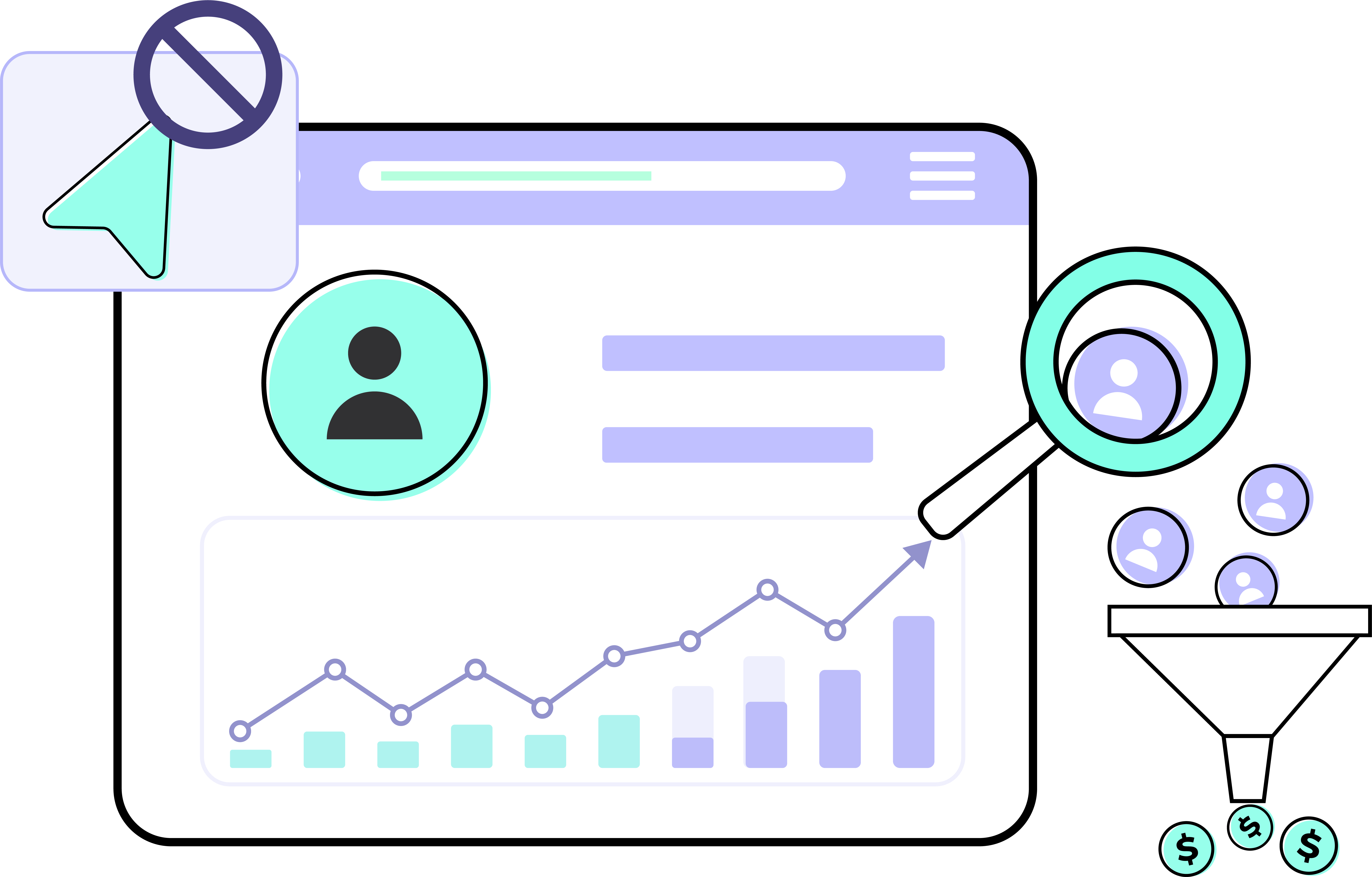
Traditional attribution models are caving under pressure. Consumers engage with a wide range of platforms, devices, apps, and websites, which makes it increasingly difficult for even some of the best affiliate marketing tools to track every click and conversion accurately, and this situation appears to be a challenge for progressive brands. Hence, marketers have come up with a unique way to track marketing metrics or attribute conversions and engagement to marketing efforts with the concept of “Clickless Lead Tracking.”
What Are Clickless Leads?
As the name suggests, clickless leads are a method of tracking affiliate marketing metrics that allows customers to connect with a marketer without needing to click a link, thanks to clickless lead tracking. This method simply replaces the click with other tracking measures, such as promo codes, device identifiers, server-side data, offline data, and API integrations.
How Does Clickless Lead Tracking Work?
Clickless lead tracking works based on the following methods, which function in the following ways:
- Tracking Exclusive Promo Codes:
Clickless Leads replaces links with promo codes and is applicable in varied forms of marketing, ranging from influencer marketing to affiliate marketing. The merchant or organization assigns these promo codes to affiliate marketers. When a customer enters the assigned promo code during the checkout step, the system records the code usage and attributes the activity/lead/sale to the original campaign and its marketers. These promo codes act as a tracking identifier, which obviates the need for a clicked link. The types of promo codes applied in clickless lead tracking are, namely, discount codes, vanity codes, and referral codes. Marketers can track affiliate campaigns and measure their effectiveness based on the conversions generated when users enter these promo codes, regardless of the source of the user. This includes users who arrive via direct traffic, organic searches, or any other indirect methods.
- Device and Session Matching:
Advanced attribution systems analyze device fingerprints such as OS type, browser type, hardware and software configurations, and device resolution to track and attribute conversions of returning users with a high degree of precision. The brand collects this information anonymously and uses it to create a probabilistic profile of the user’s device. Additionally, session-level data is analyzed, such as browsing history, duration of engagement, and frequency of visit, to determine how users interact with emails, websites, social media platforms, digital ads, SMS campaigns, chatbots, online stores, landing pages, videos, podcasts, and physical stores. Moreover, the app install tracking software analyzes how users interact with the app by monitoring their engagement, in-app activities, session duration, and overall user journey. Thereafter, interaction patterns are examined to reveal continuity across the user journey and establish a nexus between each of the user’s visits across multiple touchpoints. These systems also track IP ranges and geolocation proximities to identify if multiple interactions are related to the same user or not. Furthermore, this feature enables cross-device tracking even when cookies or click-based attribution is no longer present to result in accurate lead attribution and improved campaign optimization.
- API Integrations:
API integrations are the backbone of clickless lead tracking as they enable seamless data exchange between CRMs, websites, ad platforms, analytical tools, apps, and automation systems. When a user makes a transition from viewing an ad on one platform to watching a video and then later submitting a form on another platform, APIs relay this information to a centralized system where the user journey is tracked anonymously and which converts these fragmented pieces of data into a unified lead profile. This real-time synchronization between disparate channels enables sending conversion-specific information back to ad platforms for attribution modeling and to gain a holistic and accurate understanding of customer behavior. In addition, APIs support a server-side tracking mechanism that improves data reliability in a privacy-driven environment where the functioning of browser-based tracking methods is totally curtailed.
- Clickless Postbacks:
Traditional attribution systems often struggle to identify which click was the main driver of the final conversion. Hence, clickless postbacks use static identifiers, ensuring that every conversion is counted, every affiliate is credited precisely, and every optimization decision is backed by rock-solid data you can trust blindly. What once was a fragile, flimsy click-dependent system is transformed into an ironclad, real-time data pipeline that performs impeccably across all channels and devices and sustains privacy restrictions. These static identifiers include campaign IDs, attribution IDs, creator-specific codes, and predetermined tracking parameters as assigned to a specific marketing source. They are stable and reliable, attributing sales to the correct campaign even without a traditional click. Based on server-to-server tracking methodology, the advertiser’s server sends a postback request to the attribution platform, which consists of details on campaign source, timestamp, geographic information, conversion value, and more. The beauty of this static identifier is that it remains constant regardless of the device type used, or rather, it remains device agnostic. It is used mainly in scenarios such as dark social channels, such as WhatsApp; private messaging; offline advertising, Native Advertising, podcasts, and more. These postbacks improve reporting accuracy and measure campaign performance with greater precision. Hence, it is that anchor that gives due importance to the smallest of details that can impact business outcomes, where traditional systems actually hit a ceiling.
How is Clickless Leads Tracking Beneficial?
For forward-thinking brands, every lead and the data behind that lead are pivotal for their growth and success. The presence of fragmented, incomplete, conflicting, or inaccurate data presents a false picture of your campaign, leading to misallocated budgets and poor campaign optimization. When users navigate from one channel to another, privacy constraints act as a roadblock to tracking the customer’s overall journey. Additionally, cookies are becoming less effective, which leaves marketers in hot soup and forces them to search for the next best solution to accurately track every aspect of the user journey. This scenario enables clickless lead tracking, which transforms the marketing landscape by providing brands with a clearer, more complete, and more accurate understanding of their leads, including their origins and the factors driving conversions. Server-side tracking systems, which are based on first-party data and offer API integration to sync systems, have made this transformation possible. This method shows how brands are becoming smarter and how they may upgrade the outdated, click-based tracking methods that companies previously used. It also protects their ad budget and helps them to scale and provide an exceptional user experience. You can apply clickless lead marketing in some channels, including magazines, TV, radio, app advertising, and physical stores. Here are some of its benefits for marketers:
- Improved Cross-Device Tracking:
As already discussed above, traditional marketing relied on tracking clicks to measure campaign performance, which often missed important conversions, especially for users who viewed ads on one specific channel but converted later through another channel. Hereby, clickless lead tracking appears to narrow down this gap by analyzing device patterns, behavioral signs and signals, and user sessions and presents a simplified and overarching picture of how these different touchpoints interact and contribute to conversions. As a result of this, marketers get a sense of which channels are driving awareness and which are actually making a sale. Thus, they make an informed decision about budget allocation and campaign optimization instead of relying on only last-touch attribution models.
- Enhanced Campaign Optimization and Increased ROI:
What is generally overlooked is the upper funnel marketing effort, which includes awareness campaigns such as video ads, podcasts, influencer marketing, and connected TV, which are leading to indirect conversions where users do not actually click on the content instantly. However, taking into account only the last-click attribution does not mean everything is “sunshine and rainbows." It is where clickless lead tracking comes in, attributing to every fleeting move of a user from one channel to another. This nuanced picture of the complete user journey helps to contribute to increased ROI and helps businesses understand which campaigns contribute to lead generation. Remember the saying: the god is in the details! Thus, marketers can optimize campaigns more effectively by unraveling the entire user journey and attributing conversions to the actual customer interactions.
- Robust Performance in Privacy First and Cookieless Era
In a modern affiliate marketing landscape, third-party cookies are deprecated, plus browser restrictions are tightened, which makes the overall tracking system crumble. However, there is a silver lining, and not everything is “the writing on the wall." Clickless lead tracking has come to the rescue of marketers, which operates at the server level and leverages first-party data signals and makes use of API handshakes to give more clean, consistent, and verified conversion data even in the most privacy-hardened environment. There are no pixels to get blocked, nor are there client-side scripts that fall apart in case of ad blockers. Moreover, it sidesteps the cookie-dependent infrastructure entirely, leading to robust performance outcomes.
Conclusion:
Clickless leads tracking goes beyond guesswork, fills the gaps in traditional ad tracking systems, and provides marketers with invaluable data. Clickless leads tracking is a strategic shift of how marketers produce authentic, measurable data where accuracy, transparency, and performance are paramount and where traditional tracking limitations appear redundant. Now marketers are well positioned to connect the dots between the awareness stage/upper funnel to the bottom funnel or final conversion, giving voice to every smallest bit of information and engagement criteria for measuring influence and intent. This approach also future-proofs their strategies against the advent of evolving privacy constraints and cookie deprecation. This further helps them unlock greater insights, allocate budgets more prudently, and redefine the functioning of their business operations. It also transforms the means of measuring attribution and ultimately results in a growth-driven process.